
WHY PEOPLE PLAY
A physics merge game makes progression visible in the container. Two identical pieces collide and become one higher-tier object, freeing some space while introducing a larger piece that changes every later drop.
Physics makes the format less predictable than a flat matching grid. Pieces roll, rebound, settle, and push their neighbours, so the best release point is the one that still works after the pile moves.
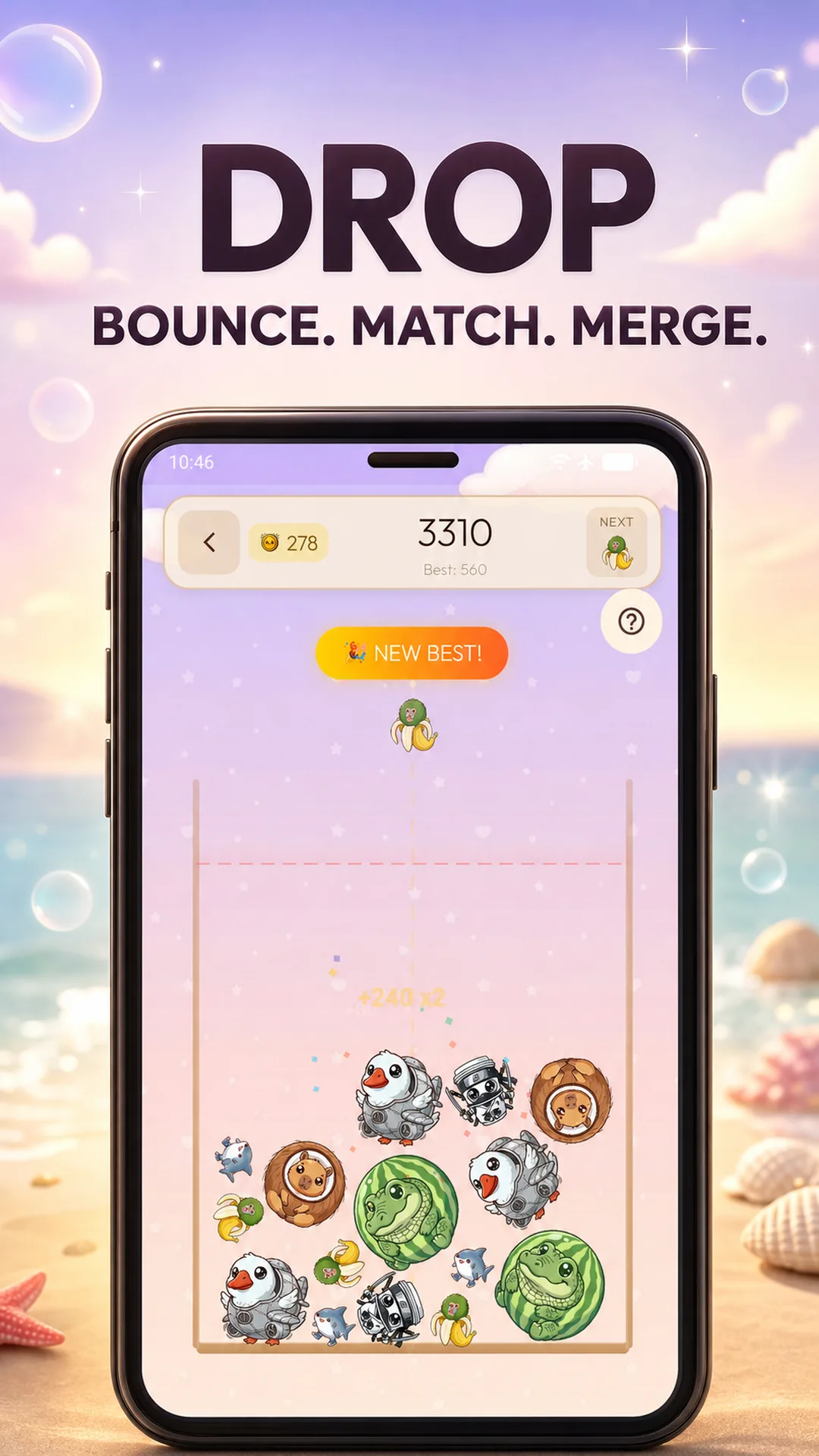
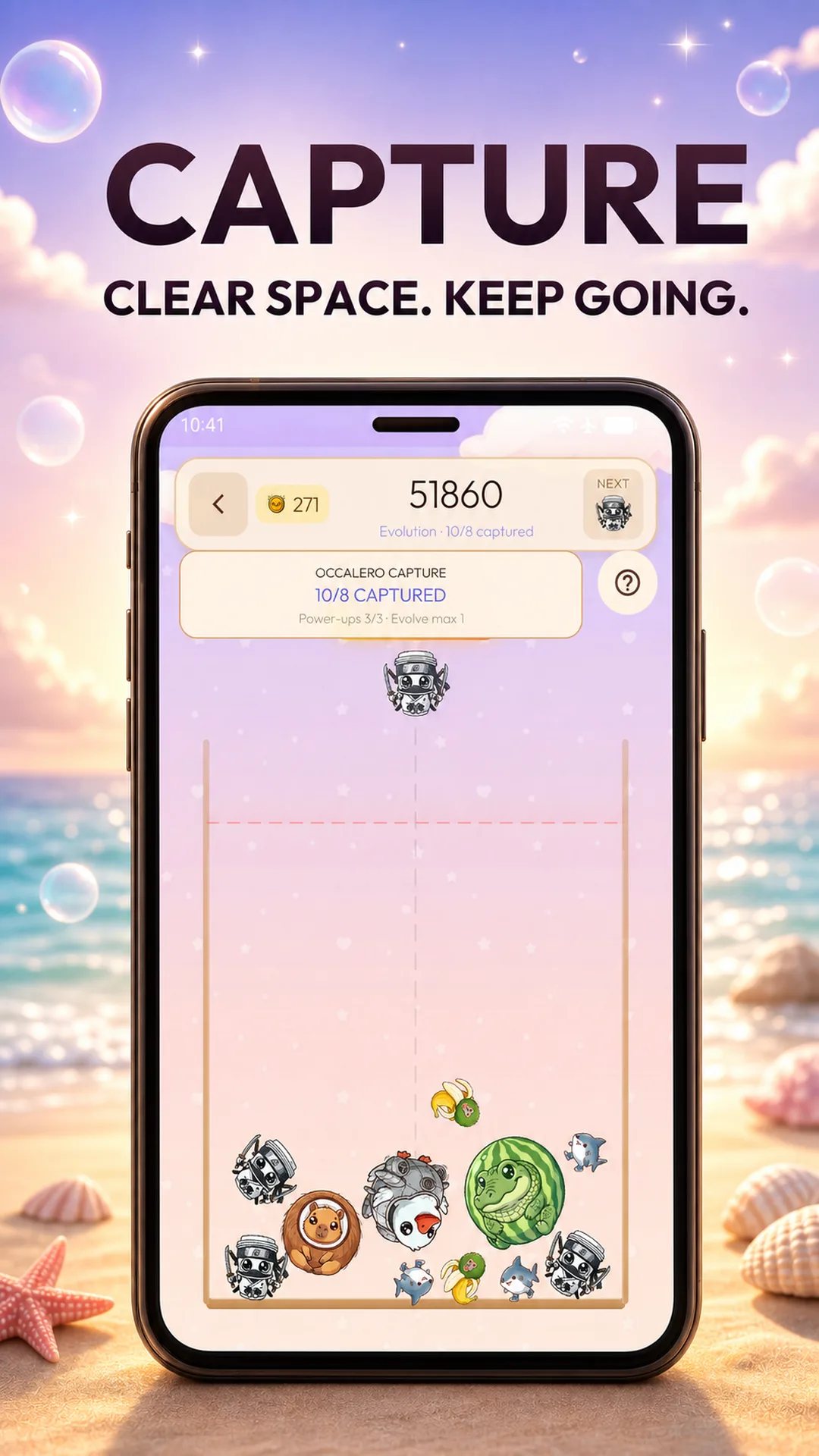
This page covers drop-and-collision merge puzzles, not number-tile merge boards. Meme Merge uses moving character bodies, a next-piece preview, and a danger line; other merge games may use different matching and failure rules.
One Meme Merge drop can trigger two merges
Drop a Tralalero onto a matching Tralalero and the collision creates a Gibbo at their midpoint. If that new Gibbo settles against another Gibbo, the production engine queues a second collision merge into Assassino. The exact path depends on the pile’s motion, which is why landing space matters as much as the first match.
The danger line gives the pile time to move
A new object is ignored by Meme Merge’s danger check until it has existed for two seconds. After that, an object above the line advances a continuous three-second game-over timer. The timer resets when every object returns below the line, so a moving pile can still recover before the countdown completes.
Meme Merge turns that system into an endless character run. Play it online to practice drop placement, next-piece planning, chains, and danger-line recovery, or download the complete Android edition from Google Play. An iOS edition is planned.