WHY PEOPLE PLAY
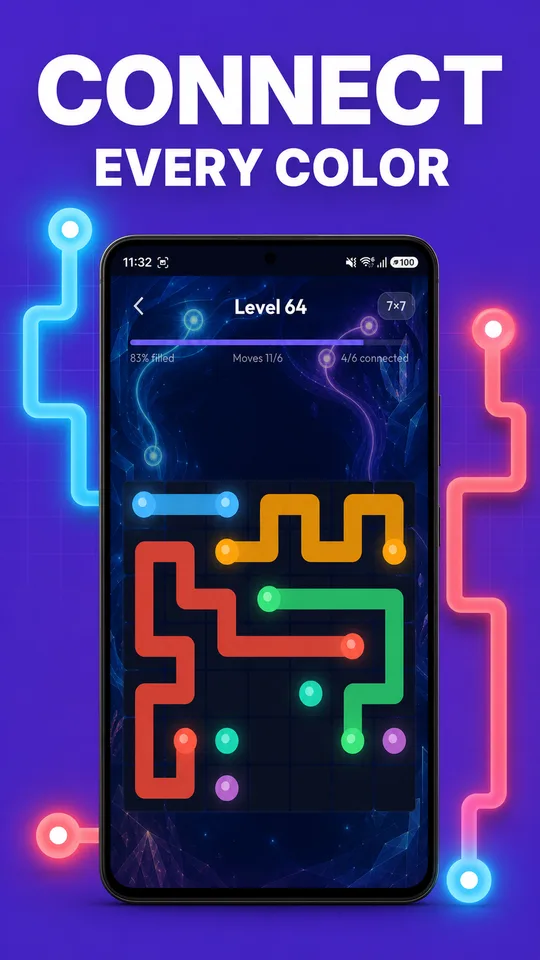
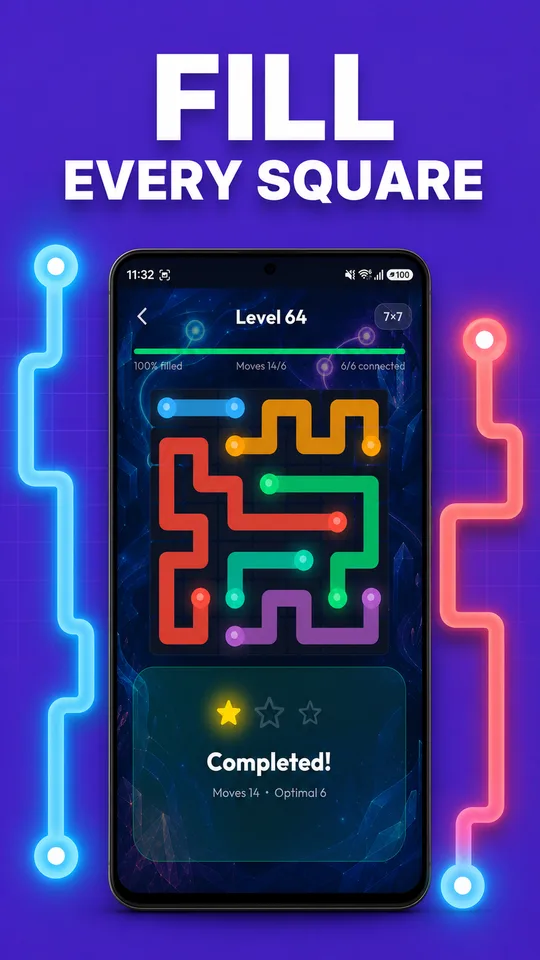
Matching-color path puzzles ask a simple question: can every pair reach its partner without blocking the rest? Unlike numbered dot-to-dot drawing, the goal is not to reveal a picture. The complete grid is one logic problem: a line that looks right alone can cut off another color or strand an empty square.
Good path puzzles feel readable even when they are difficult. Endpoints, corners, edges, and narrow gaps all provide information. Solving becomes a process of testing routes, spotting constraints, and replacing a line when the remaining space proves it cannot be right.
The board is one connected problem
Do not solve each color independently. Before drawing a long route, look at what it divides: which dots remain on either side, where they can exit, and whether every empty cell can still belong to a path. The tightest pair often determines how the more flexible pairs must travel.
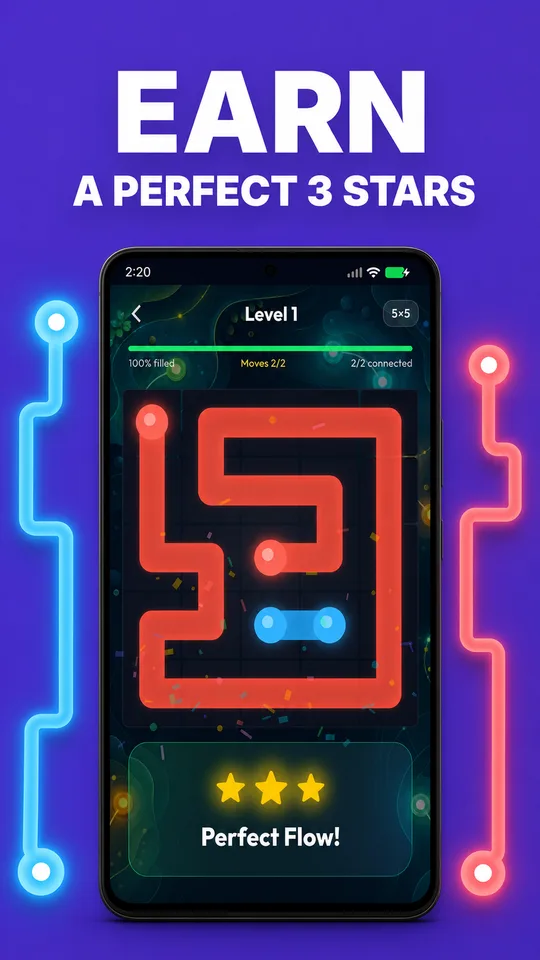
Play generated FlowD boards directly in your browser. The Google Play edition develops the same rules across 240 offline campaign levels, from approachable 5×5 boards to 12×12 mastery grids. Efficient solutions earn up to three stars, while Daily Challenge and Time Trial offer different ways to play.